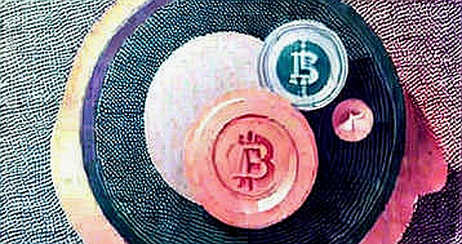
At the heart of every exodus lies a deceptively simple question: what do you carry when the border closes? Russian hardware wallet distributors are reporting sales that have more than doubled, timed to the approach of new cryptocurrency regulations. There has been no breakthrough in secure element chips, no novel firmware release, no new protocol that makes cold storage dramatically better than it was last quarter. What changed is not the technology. What changed is the perceived cost of trusting someone else with your private keys.
This is the kind of signal that market analysts tend to compress into a single line about rising self-custody adoption. But numbers like these deserve a slower reading, because hardware wallets sit at the intersection of infrastructure, identity, and the oldest human instinct: the need to protect what is ours when institutions we once relied upon become unpredictable.
Hardware wallets are not a new idea. They are mature, commercially deployed devices that have existed for more than a decade. Their security model rests on physical isolation: private keys generated inside a secure chip, never exposed to an internet-connected environment, protected by a PIN and a recovery seed that the user must safeguard with near-religious discipline. In the taxonomy of crypto infrastructure, they occupy a humble but critical niche — the key management layer that makes self-custody operationally viable for ordinary people.
What the Russian sales data reveals is not an innovation story but a penetration story. The technical roadmap of hardware wallets has been stable for years. The variable that moved is regulatory pressure. When a government signals that it may impose stricter rules on cryptocurrency transactions — when the prospect of wallet audits or compulsory key reporting enters the public imagination — the rational response for many users is to move assets from platforms they do not control to devices they do.
The broader context matters here. Russia has been under layered international sanctions since 2022, which has progressively severed its citizens from Western financial rails. Exchange services have restricted access, payment corridors have narrowed, and the state's appetite for financial surveillance has grown. Against that backdrop, the hardware wallet is not a speculative gadget; it is a lifeline. The phrase “not your keys, not your coins” moves from being a community slogan to being a survival heuristic. The doubling of sales suggests that a meaningful segment of Russian crypto users has internalized this lesson at a moment when the cost of ignoring it is rising. The timing is particularly telling: sales doubled not after a major hack or exchange collapse, but in anticipation of a regulatory change — a forward-looking response rather than a reactive one. It is the financial equivalent of stocking provisions before the hurricane warning, rather than after.
I have spent years examining the intersection between code and accountability, and one pattern repeats with unsettling consistency: adoption spikes during moments of perceived threat, not during moments of technical elegance. During the DeFi summer of 2020, I audited interest rate models and found that the most dangerous vulnerabilities were not in the math but in the social contracts around it. Similarly, the Russian hardware wallet surge tells us less about the devices than about the erosion of trust in intermediaries.
From a technical standpoint, the implications deserve careful unpacking. The first is a supply chain question. Hardware wallets depend on secure chip manufacturers, logistics networks, and firmware signing infrastructures predominantly headquartered in the West. If export controls tighten further, the very devices that promise sovereignty could become instruments of dependency. A hardware wallet that cannot receive firmware updates, or that ships from a jurisdiction hostile to its user, is a fragile fortress.
This is where my own experience with infrastructure audits shapes my reading. When I reviewed Aave V2's initial scripts in 2020, I learned that trustlessness is not a property you can assume; it is a property you must verify continuously. The same applies to cold storage. A hardware wallet's security assumptions — that the chip is not compromised, that the firmware is authentic, that the supply chain was not intercepted — are all assumptions that require evidence. For Russian users facing sanctions-related gray markets, the risk of purchasing a counterfeit or tampered device becomes significantly higher. A compromised hardware wallet is worse than none at all, because it provides a false sense of security while exfiltrating keys to an unknown party.
The second implication is behavioral. The doubling of sales suggests that users are not merely curious but are actively migrating. Money is moving from exchange-controlled wallets to physically owned devices. This migration has consequences beyond the individual: it reduces exchange reserves in the region, alters the distribution of on-chain assets, and increases the willingness of users to interact directly with decentralized protocols. When assets sit in a hardware wallet, the friction of moving them to a DEX is lower than moving them through a sanctioned exchange. The hardware wallet becomes a gateway, not just a vault. Seen this way, it is both a destination and a departure point — where funds rest when trust in intermediaries fails, and where the journey into direct, permissionless financial interaction begins.
There is a risk matrix that every prospective buyer should consider. The most probable failure modes are not sophisticated remote attacks; they are user errors — a recovery seed photographed by a laptop camera, a backup written on a fragile piece of paper, a device purchased from an unverified reseller. In a market where supply is constrained and demand is spiking, the gray market flourishes. And gray-market hardware wallets occupy the most dangerous position in the entire security landscape: they look authentic, they feel authentic, but their provenance is unknowable.
But here is where the contrarian angle must be stated with clarity: hardware wallets are not a complete answer to political risk, and the narrative that they represent an unequivocal victory for decentralization obscures an uncomfortable reality. A hardware wallet protects against remote attackers and careless intermediaries. It does not protect against a state that demands your recovery seed under penalty of law. It does not protect against import bans, logistics interception, or the quiet obsolescence that comes when a manufacturer decides to stop servicing a region.
The data itself must also be treated with healthy skepticism. The reported doubling lacks a clear statistical foundation. Was this online sales, offline retail, or both? Which brands were included? Over what time window was the comparison drawn? Without granular data from manufacturers or distributors, the number could overstate or understate the real trend. Single-source reporting in the crypto industry has a well-documented history of amplifying regional noise into global signals.
I am reminded of a principle from my translation work on the Ethereum whitepaper: decentralization is not an end state but an ongoing negotiation between individual agency and collective infrastructure. The Russian hardware wallet surge is a fragment of that negotiation. It demonstrates that regulatory pressure can accelerate self-custody adoption — a finding with real value for observers of global trends. But extrapolating from one country's panic-buying to a worldwide shift toward cold storage requires more evidence than a single headline.
There is also the question of what the Russian state might do next. If new regulations require citizens to declare their hardware wallets, the devices could shift from being instruments of refuge to being evidence of non-compliance. History offers sobering precedents: governments have repeatedly responded to self-custody with demands for key escrow, import restrictions, and criminal penalties for undeclared wallets. The hardware wallet is not invincible; it is merely resilient within a specific threat model.

What matters more than the device itself is the motivation behind the purchase. The Russian buyer doubling down on hardware wallets is making a statement about the legitimacy of unilateral financial control. Whether the state answers with regulation, the West answers with sanctions, or the market answers with new products, this moment marks a measurable shift in how ordinary users perceive the hierarchy of trust.
The signal I find most compelling is the potential entry of non-Western hardware wallet manufacturers into the equation. If sanctions restrict the flow of Western devices, localized alternatives will emerge. Some will be competent; some will be dangerous. The industry will need to develop robust verification mechanisms for firmware provenance and secure element integrity, regardless of the brand's country of origin. This is not a hypothetical concern; it is a near-term reality for a market segment suddenly under geopolitical magnification.
For the broader ecosystem, the lesson is this: self-custody is not a luxury feature for the paranoid. It is the fundamental expression of ownership in a system where code is law. Yet code is law, but ethics is soul. We cannot celebrate the tool while ignoring the conditions that make it necessary. Every hardware wallet sold in Russia is a small monument to the failure of institutional trust — and a quiet assertion that individuals, not intermediaries, should hold the final keys to their financial lives.
Transparency isn't the oxygen of trust; it is merely its beginning. The hardware wallet market needs transparency in its supply chains, in its firmware audits, and in its claims about geopolitical resilience. Without that, we risk mistaking a beautiful box for a safe one.
The takeaway, then, is not that hardware wallets will save us from authoritarianism, or that the Russian data points to an imminent global revolution in self-custody. The takeaway is more subtle: when people reach for the tools of autonomy, they are telling us something about the world they inhabit. We should listen with both technical precision and ethical humility. The question moving forward is not whether self-custody will grow — the question is whether we will build the transparent, verifiable infrastructure that makes it worthy of the trust it asks for.