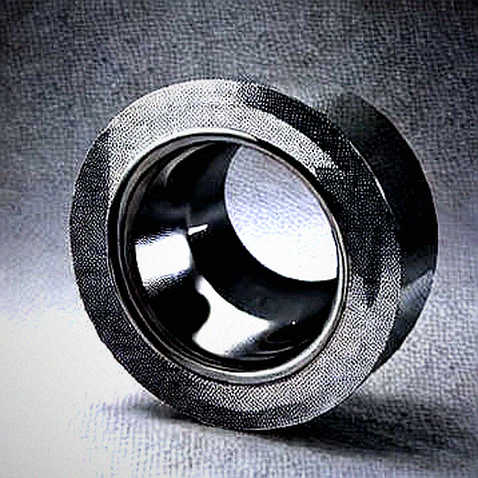
Gas fees don't lie. People do. Neither does an optical transceiver — the palm-sized module that converts electrical signals into light pulses and back again. It either carries 800 gigabits of data between two GPUs at the speed of physics, or it doesn't. No whitepaper. No tokenomics. No community vote. Just the cold mechanics of transmission. That is why the Reuters report on the Trump administration's planned ban of Chinese-made optical transceivers deserves more than a scroll-past headline. This is not another trade spat. It is a structural change in how the AI age's most critical infrastructure will be governed.
The story, as leaked: the White House, citing unnamed officials, intends to prohibit U.S. imports of Chinese optical transceivers used in AI data centers. The rule is expected to be announced later this year. The FCC is involved in the rulemaking. The stated rationale: Chinese-built components could steal sensitive information, install malware, or disrupt large data center operations. No specific incident. No named CVE. No public forensic evidence. Just a risk assessment based on capability and presumed intent.
The market barely moved. That is the tell. A policy shift that should have rattled the AI supply chain's most valuable suppliers — Zhongji Innolight, Eoptolink, Tianfu Communication, names that dominate the optical module market as thoroughly as Nvidia dominates AI compute — was absorbed like a routine fee adjustment. Why? Because the capital markets already understand what the policy documents won't state plainly: the U.S.-China AI relationship is not cooling. It is over. This ban is the formalization of a breakdown that has been visible in the photon ledger for years.
Now, the component. An optical transceiver is the neural synapse of a modern AI data center. Training a frontier model requires synchronizing tens of thousands of accelerators, and every gradient update flows through optical links. The architecture splits into two layers: scale-up, the ultra-fast GPU-to-GPU fabric inside a rack or pod, and scale-out, the data-center-wide mesh connecting thousands of racks. Both depend on transceivers. Without them, a cluster of 100,000 GPUs is just a warehouse of expensive silicon doing nothing. This is the physical layer of the AI age — and Chinese firms control the pipes.
Chinese manufacturers hold more than half of the global optical module market. In 800G, the current high-volume workhorse, they are first-tier, shipping in serious volume to Microsoft, Google, Meta, and Amazon. In 1.6T, the next-generation specification moving toward deployment, their R&D pace is effectively synchronized with the global frontier. This is not low-cost assembly arbitrage. This is a strategic choke-point, held by an adversary the United States has decided it cannot trust.
So examine the policy instrument. The U.S. historical preference in the tech war has been export controls: restrict what American firms sell, restrict what flows into adversarial hands. Chips. EDA tools. Semiconductor equipment. Export controls deny the adversary capability. An import ban does something else. It restricts what American firms can buy. It denies the adversary market access. This is the first time Washington has proposed an import ban on a Chinese AI technology category. And the signal is unambiguous: the U.S. is no longer trying to prevent China from building advanced transceivers. It is trying to prevent China from selling them into the most sensitive layer of American digital infrastructure.
Code is truth. Intent is fiction. This policy is built almost entirely on the latter. There is no public evidence of a weaponized optical module — no independent audit, no exploit disclosure, no enumerated backdoor. The ban rests on a capability-based risk calculus, the same left-of-boom logic that dominates modern cyber defense: act before the explosion because the adversary's tools are known, even when no fuse has been observed. It is preventive war, applied to supply chains.
The Huawei lesson is doing the heavy lifting. American officials have not forgotten what it cost to embed Chinese telecommunications equipment into U.S. networks in the 2000s — and how expensive and slow replacement turned out to be. The policy conclusion: block the component before it lands. The transceiver is treated as a potential trojan in infrastructure that cannot be retrofitted with trust after deployment.
I have seen this reasoning play out in another medium. At ETHDenver in 2017, I spent 48 hours auditing a token contract for a project called EtherGem. Elegant Solidity. The kind of code that reads like digital sculpture. Underneath, a reentrancy vulnerability. I chose not to make noise publicly; I emailed the developer a patch and watched the confusion unfold. Since then I have kept a ledger of beautiful-but-broken contracts. The lesson has not changed: appearance and performance do not equal trust. A system can work flawlessly in tests and still be structurally unsound. Washington is applying the same logic to transceivers — except here, the tests are global markets, the developers are national champions, and the patch is a border ban.
Break down why this particular component matters more than most market commentary suggests. The ratio of transceivers to GPUs in a modern training cluster is roughly one-to-one for the scale-up layer, and often higher when the scale-out fabric is included. A 100,000-GPU cluster can consume more than 150,000 optical modules across both layers. That means optical components are not a peripheral cost line. They are a primary bill of materials item, comparable in aggregate spend to the networking switches themselves. When Washington bans Chinese modules, it is not removing a single dependency. It is recalibrating the entire procurement structure of every major U.S. AI build. The queue of projects at Microsoft, Google, Meta, and Amazon — the companies effectively building the computational substrate of the next decade — now must reroute their supply chains under the threat of a shortage.
The immediate capacity math is not favorable to the U.S. side. Coherent and Lumentum are capable suppliers, but their volume and lead times are not geared for a sudden transfer of demand at the scale of hyperscale procurement. Japanese and Korean suppliers will absorb part of the shift, but the concentrated expertise and manufacturing scale in China is not re-creatable in a single procurement cycle. The industry consensus, informally, is 15 to 30 percent higher cost for comparable modules from non-Chinese sources, with some premium segments significantly steeper. The follow-on effect is visible before the first module is shipped: AI data center capex — already the bull market's favorite fuel — gets more expensive at the margin.
Minted nothing, promised everything. The policy promises supply-chain security; what it mints is cost inflation. Security premiums are not abstract line items. They are passed down. The AI company absorbs them, then the cloud customer, then the end user. And for the crypto ecosystem, which increasingly depends on AI-adjacent infrastructure — ZK proof generation, decentralized inference, verifiable compute — this is a direct cost channel. Token holders will feel it in the form of higher compute prices. The era of cheap AI infrastructure has a sunset clause, and this ban just moved the clock.
The double lock only deepens the picture. Optical transceivers are built on compound semiconductors — indium phosphide and gallium arsenide — and China's position upstream is thinner than its module assembly dominance. The substrate capacity sits largely in Japan and Germany. If Washington pairs the import ban with broader export controls on compound-semiconductor materials and equipment, it creates a two-way pinch: China cannot easily buy the inputs, and China cannot sell the outputs into U.S. markets.
But resource weaponization is a two-player game. China has already restricted exports of gallium and germanium, interfering with Western semiconductor supply chains at a moment of the U.S.'s choosing. During my 2022 audit of the Mirror Protocol — the algorithmic collateral system that collapsed spectacularly — I learned that leverage is only real when exercised. Chinese strategic material export controls will be exercised again, probably in response to exactly this kind of escalation. The semiconductor cold war has a materials front, and this ban just adds another trench to it.
The crypto angle deserves more attention than it has received. Bitcoin mining's hardware supply chain — ASICs built overwhelmingly by Chinese firms Bitmain and MicroBT — has been a systemic dependency for years. The U.S. never banned those imports. Miners simply bought and plugged, accepting the dependency because Washington never classified Bitcoin mining as national-security infrastructure. AI data centers are different. The classification, once made, converts a private supply chain into a state-security concern. The deeper story here: the United States is constructing a permissioned ledger of trusted hardware components, curated by regulators, enforced at the border. The industry that spent fifteen years preaching trustlessness is now watching its infrastructure substrate become explicitly permissioned.
The irony is precise. American AI infrastructure is being walled off from Chinese components in the same mechanism that crypto exchanges use to wall off OFAC-sanctioned addresses. Same logic. Same enforcement architecture. Different substrate. In my 2025 work on a Prague-based DEX's MiCA compliance posture, I watched developers treat regulation as a design constraint rather than a moral boundary. That is the winning move in this game, and Chinese optical suppliers will make it. Expect transshipment through Southeast Asia and Mexico, staged assembly in friendly jurisdictions, and rules-of-origin disputes that lawyers will litigate for years. The cat-and-mouse has already begun.
The FCC's involvement is a policy signal in itself. AI data centers, as a regulatory category, are being moved under telecommunications-style oversight. That suggests the administration wants this restriction institutionalized — harder to reverse than an executive order and more resistant to the next administration's mood swings. It also creates the legal scaffolding for future extensions. Power modules, cooling systems, fiber, server motherboards — every physical layer component of a data center is now a candidate for the same treatment. The administration is building a permanent architecture of trust-based procurement review, not a one-off ban.
Geopolitically, the pattern from semiconductor export controls will repeat: the U.S. moves, allies follow. Japan and Korea — which hold both alternative capacity and strategic alignment — will face coordinated pressure to restrict Chinese optical modules. European regulators, already engaged in telecom-equipment exclusion, will feel the pull. Taiwan, a major manufacturer of optical components with deep links to mainland supply chains, will be squeezed between economic geography and security alignment. The two-systems vision of the digital world is no longer a metaphor. It is becoming procurement policy.
China's response so far has been the standard diplomatic formula: stop smearing Chinese enterprises. Cease threats of sanctions. The subtext: all necessary measures remain on the table. That phrase is doing real work. Rare earth export controls, already implemented once at reduced scale, can be dialed up. Market access for American firms in China's data infrastructure sector can be narrowed. The response will be calibrated to the actual announcement. But the trajectory is set.
Now the contrarian part, and the part that will make security hawks uncomfortable.
The ban is a backhanded admission of Chinese competence. You do not reach 50 percent global market share on propaganda. You reach it on yields, reliability, and price. The U.S. is treating Chinese transceivers the way you treat an adversary's most dangerous weapons: with respect. That is not a position of strength. It is a position of recognition.
The ban may also fail its own strategic objective. China's suppliers will pivot toward the global South: the Gulf states, Southeast Asia, parts of Africa and Latin America, all actively building AI infrastructure with fewer questions asked. Saudi Arabia's NEOM project and the UAE's sovereign AI funds are already deep in procurement of Chinese data center components. The effect of the American ban may be to accelerate the geographic rebalancing of Chinese exports rather than reduce China's technological power. The ledger keeps score — and decoupling does not automatically deliver advantage.
And the market's muted reaction is information. When an import ban on a dominant supplier category arrives without significant volatility, it means the two-supply-chains narrative was already priced in. Equities have been positioning for this for quarters. For investors, that means the easy trades — long U.S. or friend-shored optical names, short Chinese ones — have been executed. The residual risk is not in the trade. It is in the unmodeled variables: how much the security premium slows global AI build-out, how much cost inflation delays the marginal data center project, and how much of that inflation eventually leaks into the price of every AI service and every crypto network depending on those services.
Which leaves the question the policy briefs do not answer: who pays the premium? The answer is mechanical. The cost cascades down. Data center projects grow more expensive, so AI compute grows more expensive, so AI products grow more expensive, so the users — enterprise customers, token holders, consumers — absorb the inflation at the bottom. Security premiums are inflation. They are never paid by governments. They are always paid by the last person in the chain.
The dual systems are coming. Two AI supply chains. Two trust domains. Two internets of compute. This transceiver ban is one welding point in the digital iron curtain — and it will not be the last. The granularity of national security review is descending from the system level to the component level, and every vendor in every layer of the AI stack will eventually be asked to declare its provenance.
For the crypto industry, this is not an external story. The rails of the next-generation blockchain infrastructure — rollup sequencers, ZK accelerator hardware, decentralized physical infrastructure networks — will be built on one side of the divide or the other. Neutrality is not on offer. The trusted-hardware concept, once the crypto world's rhetorical enemy, is becoming the literal architecture of the AI age.
Check the block height. Then check the data center. The photon ledger records every ban, every premium, every pivot. It is a ledger that does not care about narratives. And the bill is already in transit.