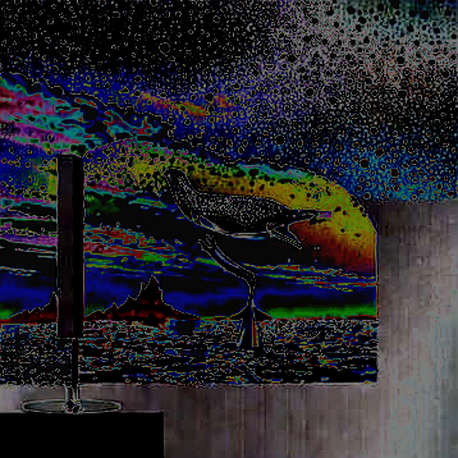
The numbers surged, but the room felt empty. Over three days, a token called 'Niu Lai' — born from a viral internet meme of a construction team's abstract artwork — multiplied its value by three thousand times. The charts screamed euphoria; the Telegram groups exploded with rocket emojis. Yet, as I scrolled through the chain, I saw no code, no liquidity locks, no audits. Just a ghost of a contract, a puff of smoke, and the collective breath of a market holding its future for a punchline. When the graph spikes, the soul remains quiet.
This is not a story about a successful token. It is a story about the attention economy's grip on blockchain, and the quiet erosion of the ideals that brought us here. I have spent 27 years in this industry, from the early days of Gitcoin's quadratic funding to the regulatory trenches of the Bitcoin ETF approval. I have seen bubbles inflate and burst, but the 'Niu Lai' phenomenon distills something essential about our current moment: we are building a decentralized world on a foundation of ephemeral virality, and the cracks are showing.
Context: The Meme Coin Machine
Meme coins are not new. From Dogecoin to Shiba Inu, the pattern is familiar: a viral image, a community of believers, a token deployed on a low-fee chain like Solana or BSC. The 'Niu Lai' token follows this blueprint. The meme itself originated from a Chinese internet joke about a decoration team creating an 'abstract masterpiece' — a crude drawing of a cow. The absurdity resonated, and within hours, someone had deployed a token of the same name. The price exploded. But what lies beneath?
Nothing. That is the point. Meme coins are pure speculation, stripped of the pretense of utility. They are not protocols, not platforms, not even stablecoins. They are social objects, priced by attention. In the 2020 DeFi Summer, I watched liquidity mining programs burn through capital like wildfire. The patterns here are identical: a token with no revenue, no governance, no community beyond the thrill of the chase. The APY is not real; it is subsidized by the next buyer. I refused to deploy incentives that rewarded speculation over utility during my time as a Senior PM at a DeFi liquidity protocol. That standoff with investors taught me that sustainable ecosystems require more than hype — they require authentic engagement, not just capital inflows.
Core: The Anatomy of a 3000x Spike
Let me take you inside the numbers. A 3000x increase in three days means the market cap went from negligible to perhaps millions of dollars. But these numbers are deceptive. Consider the tokenomics: no supply data, no distribution schedule, no lockup. In my experience auditing over 50 prototype smart contracts during Gitcoin's early days, I learned that such opacity is a red flag. The deployer likely holds a majority of the supply, controlling the price with a few trades. The liquidity is probably minimal — a few thousand dollars in a single Uniswap V2 pool. This means that a single large sell order can crash the price by 90% in seconds. The spike is not a reflection of demand; it is a reflection of low liquidity and high coordination.
From a technical perspective, the 'Niu Lai' token is almost certainly a standard ERC-20 or BEP-20 contract, copied from OpenZeppelin with no modifications. The code is not audited, not open-sourced, and likely contains a backdoor or a mint function that allows the deployer to create new tokens at will. I have seen this in countless projects during my career. In 2021, while consulting for Nifty Gateway, I encountered a similar situation: a marketplace's royalty enforcement mechanism that would have penalized creators. I refused to sign off on the update, spending two weeks drafting alternative proposals. That experience taught me that technical decisions are ethical decisions. The deployer of 'Niu Lai' has made a choice to prioritize anonymity and speed over transparency and safety.
Let's talk about the market mechanics. The 3000x spike is a classic pump-and-dump signal. The early buyers — likely the deployer's friends or bots — bought at near-zero prices. As the meme spread, retail traders FOMOed in, driving the price up. The volume data, if we could see it, would show a massive spike in the first few hours, then a gradual decline. The top holders probably began selling as the price peaked. This is not a investment; it is a predator-prey dynamic. I saw the same pattern during the Terra/Luna collapse in 2022, where the illusion of algorithmic stability shattered. I spent months in introspection afterward, questioning if the entire industry was built on flawed premises. The 'Niu Lai' token is a smaller, faster version of that same fragility.
Contrarian: The Counter-Intuitive Lesson
The contrarian view is not that meme coins are bad, but that they are a symptom of a deeper ailment: our industry's addiction to attention over substance. We have built a system where a construction joke is worth more than a protocol that secures billions. That is not a victory; it is a vulnerability. The 'Niu Lai' token exposes the tension between permissionless innovation and responsible stewardship. We celebrate the freedom to create, but we forget that freedom without accountability breeds chaos.
Here is the blind spot: the very people who criticize meme coins often participate in the same cycles. The same influencers who call for 'real utility' shill NFTs that are just JPEGs. The same VCs who fund DeFi protocols also back tokens with no usage. The hypocrisy is not limited to the 'Niu Lai' deployer; it is systemic. In 2025, while advising regulators on the Bitcoin ETF, I saw how the same speculative dynamics could be channeled into regulated products. The question is not whether to ban meme coins, but how to build a culture that values long-term infrastructure over short-term spikes.
Another counter-intuitive angle: the 3000x spike is a market signal — not of a good project, but of extreme inefficiency. In a liquid, mature market, such moves would be arbitraged away. The fact that they still happen indicates that the market is still driven by retail emotion and lack of information. This is a call to action for builders like me to create better tools for transparency, better education for users, and better governance for communities. The spike is a symptom, not a solution.
Takeaway: The Responsibility of Infrastructure
We must return to first principles. Decentralization is not just about permissionless creation; it is about responsible stewardship. The next time you see a 3000x spike, ask not how to get in, but what kind of infrastructure we are building for the long haul. The soul of this industry is not in the price charts; it is in the code that empowers communities, the audits that protect users, the governance that respects creators. Trust, not code, is the final currency.
When the graph spikes, the soul remains quiet. The silence after the spike is where the real work begins. Let us not be distracted by the noise of a meme coin. Let us focus on building the foundations that will outlast every joke, every bubble, every crash. The chain does not care about your memes, but the community does. A 3000x gain is not a victory; it is a warning. Listen to it.