The morning after Donald Trump called for the Federal Reserve to slash interest rates by a full percentage point, I watched Bitcoin's price twitch—a five-dollar flicker, then nothing. The market had already priced in the possibility of a September cut. But the whisper I heard wasn't about yield curves or liquidity. It was a murmur from the same ghost that haunted me during the 2018 Solidity audit of EtherTrust: the fragile architecture of trust. When a sitting president publicly demands that an independent central bank lower rates to save the government money on debt servicing, we are no longer in the realm of economics. We are in the realm of political engineering. For those of us who believe that blockchain's primary value proposition is the removal of human discretion from monetary policy, Trump's latest outburst is both a warning and a confirmation. It tells us that the last true edge of decentralized money is not speed, not privacy, not even censorship resistance. It is the ability to escape the political cycle of short-termism that has captured every fiat system in history.
Context: The Weaponization of the Fed
In late August 2024, Trump took to Truth Social to argue that the Fed should cut rates immediately, citing the burden of high interest costs on the federal debt. He claimed that lowering rates by just one percentage point would save the government $600 billion a year. The math is dubious—a 1% cut on a $30 trillion debt would save roughly $300 billion, not $600 billion, unless you factor in some creative refinancing assumptions. But the arithmetic is secondary to the signal. Trump is openly challenging the core principle of central bank independence, a norm that has underpinned global monetary stability since the 1980s. He even praised Fed Chair Jerome Powell's performance while simultaneously accusing the broader committee of being "politicized." This is a classic divide-and-conquer tactic: isolate the leader, blame the institution. It is the same playbook used to undermine trust in courts, intelligence agencies, and election systems. Now it is being applied to the institution that controls the world's primary reserve currency.
For the crypto community, this is not a distant Washington drama. The entire theoretical foundation of Bitcoin rests on the assumption that central banks are prone to political capture and inflationary bias. Satoshi Nakamoto's white paper opens with a critique of trust-based systems and the need for a proof-of-work chain that doesn't require a central counterparty. For years, that critique has been seen as a thought experiment, a warning about hypothetical future abuse. But Trump's public pressure campaign makes the theoretical concrete. He is not just talking about lower rates; he is talking about using the Fed as a tool to reduce the government's own interest burden, which is a direct conflict of interest. The Fed's dual mandate is maximum employment and price stability. It is not "minimize Treasury borrowing costs." When a president conflates the two, he is crossing a line that has historically been taboo.
Core: The Crypto Implications of Politicized Monetary Policy
Let me be clear: I am not a macro economist. I am a blockchain engineer who spent the 2020 DeFi Summer watching permissionless lending protocols empower people who had been rejected by banks. But I have also watched the 2022 bear market from a cabin in the Alps, processing the emotional toll of speculative greed. When I look at Trump's rate cut demands, I see three specific implications for crypto that are not being discussed in the mainstream financial press.
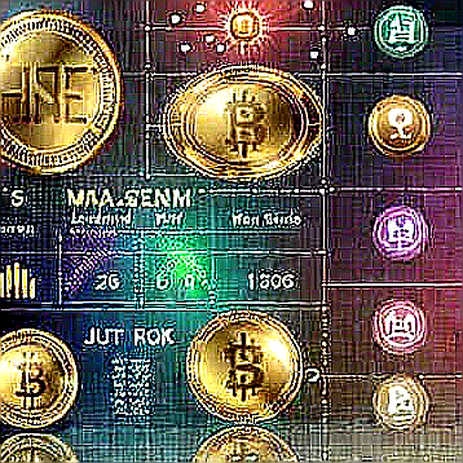
First, the stablecoin market is about to face a severe stress test. The overwhelming majority of stablecoins—USDT, USDC, DAI—are backed by U.S. Treasury bills and other short-term government debt. If the Fed cuts rates aggressively, the yield on these reserves collapses. Tether and Circle will have to reduce their fee structures or turn to riskier assets to maintain profitability. A 1% rate cut could wipe out hundreds of millions of dollars in annual revenue for the largest stablecoin issuers. More importantly, if the Fed is seen as politically compromised, the credit quality of U.S. Treasuries may be called into question. That would be a systemic shock for the entire crypto economy, because stablecoins are the plumbing of every exchange and DeFi protocol. During my time auditing the LendPool protocol, I learned that the most dangerous vulnerabilities are not bugs in the code—they are assumptions about the stability of the underlying collateral. If the Fed loses its credibility, the collateral backing 80% of crypto liquidity becomes suspect. That is a risk that no smart contract audit can fix.
Second, the Bitcoin narrative of "digital gold" will be tested in a new way. Bitcoin's price has historically been correlated with global liquidity. When central banks print money, Bitcoin rises. When they tighten, Bitcoin falls. But Trump's pressure campaign introduces a new variable: the erosion of the Fed's independence could lead to a permanent increase in the risk premium on all dollar-denominated assets. If investors begin to doubt that the Fed will prioritize price stability over political expediency, they will demand a higher yield to hold Treasuries. That will push long-term rates up, not down, even as the Fed cuts short-term rates. This is the "steepening yield curve" scenario that my analysis flagged. For Bitcoin, this creates a paradoxical environment: short-term liquidity is bullish, but long-term uncertainty about the dollar's reserve status could trigger a flight to real assets. I have seen this pattern before. During the 2021 NFT explosion, I traced the on-chain metadata of CryptoSculptures to centralized servers and exposed the illusion of permanence. Now, the crypto market is facing a similar illusion: the assumption that the Fed will always be a rational, independent actor. If that assumption breaks, the floor falls out from under the entire risk asset pyramid.

Third, the DeFi ecosystem will experience a shift in the cost of capital that could either accelerate or destroy the sector. Lower Fed rates reduce the opportunity cost of holding crypto assets, which is generally positive for risk-on sentiment. But they also reduce the yield on money market protocols like Compound and Aave. When I first encountered the reentrancy vulnerability in EtherTrust, I learned that the most dangerous bugs are the ones that look like features. A low-rate environment makes DeFi lending look less attractive to institutional capital, which may retreat to the safety of government bonds if the yield differential narrows. The sector will need to innovate—real-world asset tokenization, decentralized structured products, synthetic dollar derivatives—to maintain its appeal. The Uniswap V4 hooks, which I have written about extensively, are precisely the kind of programmable complexity that can create new yield opportunities. But complexity is a double-edged sword. My experience with the Solidity audit taught me that only 10% of developers can safely navigate advanced smart contract logic. The rest will create bugs that drain liquidity. If the Fed cuts rates, the DeFi space will see a surge of new projects trying to capitalize on the liquidity wave, but many will fail due to poor engineering. The community must prioritize security audits and formal verification more than ever.
Contrarian: The Bear Trap in the Bullish Narrative
I have spent the last six months teaching blockchain fundamentals to underprivileged teenagers in Milan. It has grounded me in a way that the 2022 crash could not. One of the first lessons I teach is that "low interest rates are not always good for crypto." This is a contrarian position that most crypto evangelists will resist. But I have seen it before. In 2020, the Fed's emergency rate cuts triggered the DeFi Summer, but they also created the conditions for the 2022 collapse. Easy money inflates bubbles. When the Fed is forced to raise rates again—because inflation will inevitably return if the political pressure becomes policy—the hangover will be brutal. The market is currently pricing in a 70% chance of a September cut. If Trump's pressure causes the Fed to cut earlier and deeper than the data warrants, we could see a repeat of the 2021-2022 cycle: a liquidity-driven rally followed by a devastating correction when inflation reemerges.
Moreover, the contrarian take is that a loss of Fed independence would actually be bearish for Bitcoin in the long term. Why? Because Bitcoin's value proposition is its predictability. The 21 million cap is only meaningful if the rest of the monetary system is equally predictable. If the Fed becomes a tool of political whims, then the entire global financial system becomes unpredictable. In periods of extreme uncertainty, investors do not flee to Bitcoin; they flee to the dollar, because it is the most liquid instrument in the world. We saw this in March 2020 when Bitcoin crashed alongside stocks. The narrative of "digital gold" only works during moderate inflation. During hyperinflationary scenarios, or during scenarios where the credibility of the dollar is questioned, the first move is a cash grab, not a crypto rally. The recent bear market has taught me that survival matters more than gains. Readers need to know if their assets are safe. If the Fed's credibility cracks, the safest asset is not Bitcoin—it is the Swiss franc, or gold, or even real estate. The crypto community must be honest about this limitation.
Another blind spot in the bullish narrative is the assumption that Trump's pressure will actually succeed. The Fed has resisted political pressure for decades. Paul Volcker, Alan Greenspan, Ben Bernanke, Janet Yellen—all faced political heat and stood their ground. But the current environment is different. The Fed's leadership is less unified, and the political polarization is more intense. If one or two Fed governors resign due to the pressure, the remaining members may be more pliable. The 2018 Solidity audit taught me that the most critical vulnerabilities are often the ones that emerge from human error, not code. The same is true for central banks. The human element—fear, ambition, exhaustion—can override institutional safeguards. The crypto market should not assume that the Fed will remain independent. It should prepare for a scenario where the Fed becomes a branch of the Treasury, printing money to finance deficits. In that scenario, Bitcoin will eventually rally, but only after a painful transition period of volatility and uncertainty.
Takeaway: The Proof of Soul in Monetary Policy
In 2026, I co-authored a manifesto called "The Proof of Soul," which argued that in an age of AI-generated synthetic media, cryptographic identity is the last bastion of human authenticity. Trump's rate cut demands make me realize that the same principle applies to monetary policy. The Fed's credibility is not a mathematical certainty; it is a social contract. It depends on the belief that the institution will act in the long-term interest of the economy, not the short-term interest of any political party. That belief is currently being tested. For the crypto community, the lesson is not to cheer for lower rates. The lesson is to build systems that do not depend on the Fed's credibility at all. The Lightning Network, despite its routing failures and channel management complexity, is a step in that direction. The DeFi protocols that survive the next cycle will be the ones that are fully decentralized, with stablecoins backed by overcollateralized crypto assets, not by Treasuries. The open-source ethos that I have championed for years is not just about code; it is about governance. The architecture of trust is not in the code, but in the invisible hand of decentralization. If the Fed falls, the crypto community must be ready to stand on its own.

The question I leave you with is not whether Trump's rate cut will happen. It is whether the crypto ecosystem has the maturity to see through the short-term liquidity illusion and focus on the long-term structural vulnerability. The ghost in the Fed is not a bug; it is a feature of the political world. The only way to exorcise it is to build a parallel system that does not need exorcism.