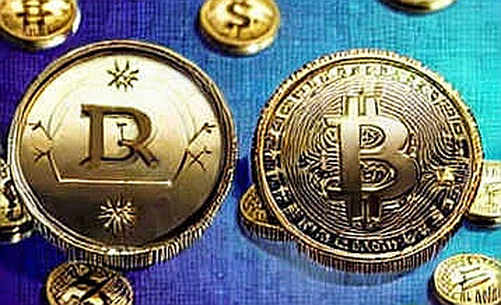
Over the past seven days, a token called Bundle Cat climbed to a $37 million market cap and printed a fresh all-time high. Its 24-hour gain: 98%. Its 24-hour volume: $1.5 million.
Divide one by the other. You get a daily turnover of roughly 4.1%.
Sit with that number. For an asset screaming "all-time high," 4.1% turnover is a whisper, not a roar. Hot memes in this cycle routinely churn 20% to 100% of their float in a single session. BUN does not. Either the float is locked far tighter than the "fair launch" story implies, or the liquidity is too shallow to circulate. Both readings point the same direction: a small group holds the price.
Speed kills. Precision saves. So let's slow down and audit what we actually know — and, more importantly, what nobody is telling us.
BUN is the mascot token of Mosh, a launch platform building on Robinhood Chain. That is the entire public footprint.
By every honest reading, Mosh has not fully launched. BUN is described as its "first trial run" — an experimental token minted before the rails underneath it were finished. The mechanism is a two-part pitch: "crowd-locking," which I take to mean community-funded initial liquidity locked against early exit, and "AI market-making," a machine-driven liquidity provider standing ready to quote both sides. BUN is explicitly not the final governance token, and whether Robinhood endorses any of this remains, in the source's own careful phrasing, "to be observed."
I spent three months in 2017 auditing DAO contracts during the ICO boom, flagging twelve reentrancy flaws in a protocol called EthicChain that could have drained $4 million in user funds. The lesson I carried out of that work was never about Solidity. It was that the information a project chooses not to disclose is itself data. Silence is not neutral. In crypto, and especially in memes, silence is frequently guilty.
Audit the algorithm, not just the code. Here is what the source does not say. No total supply. No distribution schedule. No unlock calendar. No audit. No named team. No legal entity. Not one line of code.
The first fact about Bundle Cat is not a number. It is a void — and the void is the signal.
In meme markets, tokenomics is everything. Not because memes need utility, but because distribution determines who can move the price and when. When a project publishes zero allocation data, the base rate is not innocence. The base rate is insider concentration. You cannot assess dilution, unlock cliffs, or whale control when the supply exists only as a promise. That is not a neutral omission. It is a structural vulnerability dressed as mystery.
Now the mechanism. "AI market-making" is the black box at the center of this story. Who trains the model? Can its parameters be tuned mid-auction? Can it pull liquidity unilaterally, at the discretion of a party we cannot name? Nobody will say. Here is the contradiction that should stop every reader cold: you cannot stack "fair launch" rhetoric on top of a proprietary, undisclosed market-maker and call the result fair. If the AI quotes on behalf of the team, its pricing power is a de facto centralization of control. The fairness is theatrical.
The dependency chain makes this worse. BUN sits at the very end of a pipeline: Robinhood Chain as infrastructure, Mosh as issuing rule, BUN as a speculative byproduct. The upstream layers are not finished. An asset built on two unfinished floors is not early. It is load-bearing on scaffolding. When "first trial run" is the disclaimer, the smart contract and its rules may be rewritten or reset at any moment. Early buyers are not investors. They are test subjects paying for the privilege.
The turnover math deserves its own audit. A $37 million cap trading $1.5 million in a day, right as it claims an all-time high, is a liquidity red flag, not a confirmation. Low turnover against a spiking price can mean three things: chips are concentrated in few hands; tradable depth is thin; or the volume itself is manufactured, spread across a narrow set of wallets. Any one of these makes the price exquisitely fragile. A single seller can define the chart.

The data source matters too. Coverage via GMGN means this token already lives inside the sniper-bot and quant-tooling ecosystem. Retail is not arriving first here. Whoever is reading this headline is reading it after machines have already positioned. The information asymmetry is baked into the venue.
And then there is the brand. The slogan on the tin says Robinhood. Robinhood is a licensed US broker-dealer, answerable to the SEC, FINRA, and SIPC. Its compliance apparatus is built to sever risk, not absorb it. When the source writes that "official endorsement remains to be observed," read that as media insurance — a signal that the link between this token and Robinhood's official roadmap is unverified at best.
That reframes the real risk entirely. The danger here is not a securities classification. Memes are rarely treated as such. The danger is brand misappropriation. The single largest threat to Bundle Cat is not a rug pull. It is a disavowal. The moment Robinhood's name is invoked in an unauthorized meme and the association goes unmanaged, the incentive for the official side to cut the cord sharply rises. A clean, public "we are not affiliated" would do more damage to this chart than any on-chain exploit.
Let me offer the contrarian read, because precision demands I not stack the deck. There is one genuine structural bright spot: crowd-locking. If community members, not the team, fund and lock the initial liquidity, the classic rug-pull path is meaningfully harder. On its own terms, that is a real improvement over the launchpads that let founders pull LP in the same block. I will give Mosh that. But notice the loophole. If the AI market-maker supplies liquidity from team-controlled capital rather than the locked community pool, the fair-launch narrative is hollowed from within — the crowd locks the pool while the machine quietly owns the price. The bright spot and the black box sit in direct tension, and only one of them can be true.

Trust no one, verify the solitude. What should a rational reader watch now? Two silences. First, the token's silence on supply and control — if it is never broken, treat the cap as fiction. Second, the ecosystem's silence on endorsement. The instant either Robinhood or Mosh speaks, the ambiguity that props up this valuation collapses. Direction is not the question. Disclosure is. And in a sideways market built on positioning, the assets that survive the chop are the ones that can answer a simple audit question without flinching.
Ask Bundle Cat who controls its supply. Ask Mosh who controls the machine. So far, the only answer any of us has received is the quiet, and the quiet is the warning. If the rails are not yet built, what exactly are buyers holding at an all-time high?