We audit the code, but who audits the conscience? That question came to mind when I saw OKX's latest upgrade: a company database and news feed integrated into their tokenized stock trading interface. At first glance, it's a mundane feature—something Robinhood or Fidelity users have taken for granted for years. But for a platform that once stood on the promise of decentralization, this move warrants a closer look.
Context: The tokenized stock market is a niche within the broader RWA (Real World Asset) narrative. Platforms like OKX allow users to trade digital representations of Tesla, Apple, or Microsoft shares, often backed by traditional custody. The value proposition is simple: access to traditional equities with crypto's speed and global reach. But the infrastructure has always been fragmented—users had to hop between a brokerage for data and an exchange for execution. OKX's latest feature aims to bridge that gap by embedding company fundamentals, financials, and news directly into the trading interface. It's a logical step for user experience, but it's also a step into a territory that challenges the very ethos of blockchain.
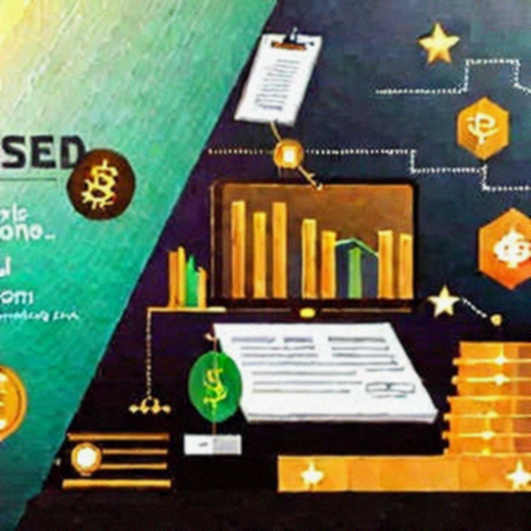
Core: Let's dissect the technical architecture. The new 'Company' module pulls in data like P/E ratio, market cap, EPS, and dividend yield. The 'News' module aggregates headlines and analyst reports. These are all classic TradFi data points, delivered through centralized APIs. OKX does not verify this data on-chain, nor does it disclose its data providers. According to the analysis, there is no audit trail for the data's accuracy or timeliness. This is a classic 'off-chain aggregation, centralized display' model. For a blockchain evangelist, this raises a red flag: the data is as trustworthy as the platform's promise, not the code's proof.
But more importantly, this upgrade signals a strategic pivot. OKX is no longer just a crypto exchange; it's positioning itself as a hybrid platform—a gateway between crypto and traditional finance. The company database is not just a convenience; it's a tool to onboard users who are uncomfortable with the complexity of on-chain verification. The feature lowers the barrier to entry, but it also reinforces the centralization of trust. Users now rely on OKX to provide accurate, real-time data. That's a lot of trust for a platform that historically has been opaque about its operations.
From my experience auditing DAO governance models in 2017, I learned that the most dangerous vulnerabilities are not in the code but in the assumptions. Here, the assumption is that centralized data aggregation is harmless. But in a world where the data itself is the source of value, who ensures it's correct? The article notes that the data provider is not disclosed, and the update frequency is unknown. This is a governance gap. If the P/E ratio is off by 0.5, it might not matter. But if the news feed is manipulated to favor a specific narrative, the damage is systemic.
Contrarian: The natural counterargument is that this upgrade is exactly what the market needs. Tokenized stocks have struggled to gain traction because of fragmented user experience. By adding company data, OKX is removing friction and making the product more accessible. This could accelerate the adoption of RWA assets, which is a net positive for the broader crypto ecosystem. But here's the contrarian angle: this upgrade might actually undermine the long-term vision of decentralization. By creating a seamless, TradFi-like experience, OKX is training users to expect centralized gatekeepers. Users stop asking 'how do I verify this data on-chain?' and start asking 'what's the next hot stock?' The platform becomes the single point of truth, which is antithetical to the trustless ideal.
Moreover, the feature is easily replicable. Binance, Bybit, or any other exchange can copy it within weeks. It does not create a moat. Instead, it escalates the feature war, where the winner is the one with the most data, not the most transparent system. The real innovation would be to make the data itself verifiable on-chain—using oracles, attestations, or zero-knowledge proofs. But that's harder, slower, and less sexy. OKX took the easy path.
We also need to consider the regulatory implications. The article outlines the high risk under the Howey test and the SEC's stance. By adding company data and news, OKX is stepping into the territory of a securities information provider, which may invite additional compliance requirements. The upgrade is a double-edged sword: it improves the product but exposes the platform to greater legal scrutiny. And as we know, the costs of compliance are often passed to the honest users.
Takeaway: Build not for the peak, but for the plain. OKX's upgrade makes the peak of TradFi integration look enticing, but it neglects the plain of fundamental principles. The plain is where we ask: Can the user verify the data? Is the system resilient to censorship? Does this feature empower the individual or the intermediary? The tokenized stock market will only realize its potential if it remains true to the ethos of transparency and self-sovereignty. I hope OKX's next step is to open-source the data pipeline or partner with a decentralized oracle network. Until then, this upgrade is a comfortable detour, not a radical leap forward.
Based on my audit experience, I've seen projects that chase the peak and lose their community. The ones that succeed are the ones that build for the plain—steady, principled, and resilient. Let's see if OKX will course-correct or continue down this path.