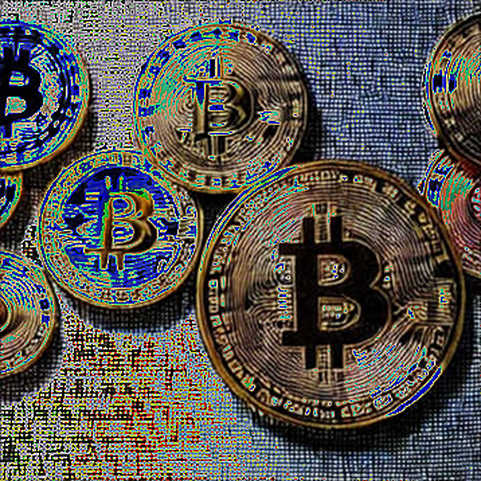
We believe in the power of a single voice to move markets. We believe that when a financial icon speaks, the crowd listens. But what happens when the voice is loud, the message is simple, and the underlying technology remains a silent, complex backdrop? Consider the moment when Robert Kiyosaki, the author of 'Rich Dad Poor Dad,' once again urges his millions of followers to buy Bitcoin. The headlines write themselves, the social media algorithms amplify the signal, and a fresh wave of retail investors feels that familiar pull of FOMO. Yet, beneath the surface of this celebrity endorsement lies a deeper, more uncomfortable truth about our industry. We are so focused on the messenger that we often forget to scrutinize the message itself. And in a bull market, where euphoria masks technical flaws, this is a dangerous oversight. This isn't about Kiyosaki's net worth or his publishing empire; it's about what his endorsement represents—and what it obscures. It's a story about the gap between the narrative of 'digital gold' and the gritty, complex reality of the technology that powers it. The real question isn't whether Kiyosaki is right, but whether we, as a community, are asking the right questions. Are we building a financial system on a foundation of celebrity hype, or are we truly understanding the code, the consensus, and the culture that will define its future? This is the paradox we must confront.
The context here is as important as the call to action. Kiyosaki is not a technologist. He is a financial educator and a master of macroeconomic narratives. His worldview is built on a critique of fiat currency, a deep-seated distrust of central banks, and a belief in hard assets like gold, silver, and, more recently, Bitcoin. This is a powerful and resonant narrative, especially in times of economic uncertainty. It taps into a fundamental anxiety about the devaluation of savings and the potential for systemic collapse. For the uninitiated, his message is simple: the system is broken, and Bitcoin is the escape hatch. This narrative has a certain cultural gravity, pulling in those who feel disenfranchised by the traditional financial system. However, from my perspective, having spent years auditing whitepapers and dissecting protocol mechanics, this narrative is a simplification. It reduces a complex, multi-layered technological and social experiment into a single investment thesis. It ignores the nuances of Bitcoin's development, the ongoing debates about its scalability, the energy consumption concerns, and the fact that its value is ultimately derived from collective belief and network effects, not from any intrinsic utility. The context of Kiyosaki's endorsement is not about the technology; it's about a philosophical stance against a system. And while that stance is valid, it does not equip investors with the tools to understand the risks inherent in the asset they are buying. The decentralization philosophy that underpins Bitcoin is about more than just escaping inflation; it's about creating a system that is resilient, transparent, and accountable. Celebrity endorsements, by their very nature, are centralized. They create a single point of failure in the decision-making process of individual investors.
Now, let's move to the core of the matter. Based on my experience auditing over 50 whitepapers during the 2017 ICO boom, I learned to separate signal from noise. I learned to look beyond the marketing deck and into the tokenomics, the governance model, and the actual code. When I apply that same rigorous lens to a celebrity endorsement like Kiyosaki's, the analysis is stark. The information value is nearly zero. There is no new technical development, no groundbreaking protocol upgrade, no shift in the hashrate, and no data on network activity. It is purely a statement of personal conviction. This is not to say that personal conviction is worthless; it can be a powerful market sentiment indicator. But it is not a substitute for fundamental analysis. The core insight here is the information asymmetry between the narrative and the technology. Kiyosaki is selling a story about wealth preservation and financial freedom. He is not selling a story about the elegance of the SHA-256 algorithm or the intricacies of the Lightning Network. This asymmetry is not inherently malicious, but it is dangerous. It creates a situation where investors are making decisions based on a charismatic authority figure rather than on their own understanding of the asset. In my work with the 'TrustStack' community initiative, I saw firsthand how this dynamic plays out. We hosted workshops to explain liquidity pools and impermanent loss, not to pump tokens, but to empower people with knowledge. We found that when people understood the underlying mechanics, they were less susceptible to panic selling and more resilient during market downturns. The same principle applies here. The more we rely on celebrity narratives, the more we abdicate our own responsibility to understand the technology. The real risk is not that Kiyosaki is wrong, but that his followers are uneducated. The market impact of such endorsements is also worth dissecting. In a bull market, these calls can act as a catalyst, briefly spiking prices as retail investors rush in. But this is a short-term, sentiment-driven effect. It does not change the fundamental value proposition of Bitcoin. It merely adds a layer of speculative noise. I have seen this pattern repeat itself countless times. A celebrity tweets, the price pumps, and then the market corrects as the reality of the asset's fundamentals reasserts itself. This is not a criticism of Bitcoin; it is a criticism of the way we consume information. We are building a financial system, but we are doing so with the attention spans of social media users. The technology is complex, but our engagement with it is often superficial. This is the core challenge we face as a community. We must move beyond the echo chamber of celebrity endorsements and engage with the substance of the technology. We must be willing to do the hard work of understanding the code, the economics, and the governance. Only then can we truly claim to be building a better system. Code binds, but people break or build.
Now, let me offer a contrarian angle, a test of pragmatism that challenges the prevailing narrative. The common assumption is that celebrity endorsements are a net positive for the industry, bringing in new users and mainstream acceptance. But what if the opposite is true? What if these endorsements, particularly from figures like Kiyosaki who are known for their apocalyptic predictions, actually attract the wrong kind of attention? They attract investors who are looking for a quick hedge against a doomsday scenario, not builders who are interested in creating long-term value. This creates a fragile investor base that is prone to panic selling at the first sign of trouble. I saw this during the 2022 bear market. When projects collapsed, it wasn't the technologists who panicked; it was the people who had bought into a narrative, not a technology. They had bought the story of 'get rich quick' or 'escape the collapse,' and when the story changed, they fled. This is the blind spot of the celebrity endorsement model. It prioritizes short-term price action over long-term network health. It brings in speculative capital, not productive capital. It creates a culture of dependency on external validation, rather than a culture of self-reliance and understanding. The contrarian view is that we should be wary of these endorsements, not because they are wrong, but because they are a distraction. They divert our attention from the real work of building robust, user-friendly applications and fostering a community that is educated and engaged. They create a narrative where the price of Bitcoin is more important than its utility. This is a dangerous path. It leads to a market that is driven by hype and fear, not by innovation and adoption. We need to ask ourselves: are we building a financial system for the long haul, or are we just creating a casino for the rich and famous to play in? The answer to that question will determine the future of our industry. Culture eats blockchain for breakfast. If the culture of our community is defined by celebrity worship and get-rich-quick schemes, then the technology will never reach its full potential. We must actively work to change that culture, to promote education and critical thinking over blind faith.
So, where does this leave us? The takeaway is not to dismiss Kiyosaki or his followers. The takeaway is to recognize the limitations of his message and to fill in the gaps with our own research and understanding. We cannot rely on a single voice, no matter how influential, to guide our investment decisions. We must do our own work. We must understand the technology, the market cycles, and the risks. This is the only way to build a resilient and sustainable financial future. The narrative of 'digital gold' is powerful, but it is incomplete. It ignores the fact that Bitcoin is also a software protocol, a social movement, and a political statement. To truly understand it, we must engage with all of these dimensions. We must move beyond the simple question of 'should I buy?' and ask the more complex questions: 'What am I buying?', 'Why does it have value?', and 'What are the risks?' These are the questions that will separate the investors from the speculators, the builders from the tourists. As we navigate this bull market, let us not be blinded by the light of celebrity endorsements. Let us instead focus on the steady, unglamorous work of understanding the technology and building the community. The future of finance is not being written by a single author; it is being coded by a global network of developers, and it is being shaped by the collective wisdom of its users. Let us be active participants in that process, not passive followers of a narrative. The promise of decentralization is not just about technology; it is about the distribution of power and knowledge. Let us embrace that promise, not just in the code, but in our own decision-making. We are building the future, together. And that future will be defined not by the voices that are the loudest, but by the ideas that are the most sound. Trust is the only currency that matters, and it is built through transparency, education, and a shared commitment to the principles of decentralization. Let us not squander that trust on the altar of celebrity hype.