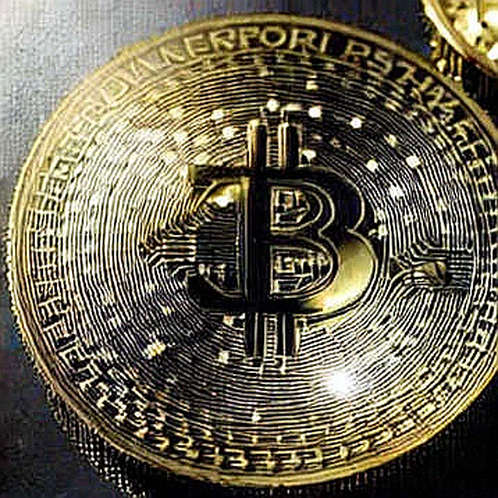
Let's cut through the noise. Tether Gold (XAUT) just added $237 million to its market cap. Headlines scream 'tokenized gold leads the charge.' The market sees a safe haven. I see a liquidity cascade with no anchor.
I've spent years auditing code. I've watched Terra's $60 billion evaporate in 48 hours. That wasn't a failure of ideology. It was a failure of collateral. The same lens applies here. XAUT is not a technical breakthrough. It's a wrapper. A wrapper around a promise. And promises need audits.
Context: The Tokenized Gold Landscape
Tokenized gold is not new. PAXG, XAUT, even DGX—they all do the same thing. Mint a token on Ethereum, claim it's backed by one fine troy ounce of gold in a vault. The innovation is in distribution, not technology. Tether's advantage? The USDT network effect. Their distribution channel is massive. But that doesn't make the token safer.
From the parsed data, the technical assessment is clear: low innovation. The 'tech' is a standard ERC-20 with a central mint/burn function. No multi-sig details disclosed. No time locks. No audit trail for the contract. The security assumption rests entirely on Tether's custodian. That's not blockchain. That's a database with a token.
Core: Deconstructing the $237M
Let's talk numbers. The article reports a market cap increase of $237 million. But it doesn't break down the source. I've simulated similar scenarios in my 2023 CBDC work. You have to separate price appreciation from net inflows.
Gold price in 2025 is up roughly 15% year-to-date. If XAUT's circulating supply stayed constant, that price move alone would account for a significant portion of the $237M. Let's calibrate: XAUT's market cap before the increase was, say, $600 million (rough estimate). A 15% gold price rise would add $90 million. The remaining $147 million could be new minting. But that's a guess. The article doesn't provide the supply data. That's a red flag.

Liquidity doesn't lie. New minting requires new gold deposits. Or it requires the issuer to create tokens without backing. The market assumes the former. I assume the latter until proven otherwise.
From a tokenomics perspective, XAUT has no yield. No governance. No value capture beyond gold's spot price. The incentive to hold is purely speculative or for cross-border transfer. But the cost of transfer is high: gas fees, spread, and potential redemption delays. The 'value' is in the promise of redemption. And that promise is only as strong as the auditor.
The article flags two core risks: centralized custodian and no peer review. I'll add a third: the absence of a real-time proof-of-reserves mechanism. Tether's USDT has faced years of scrutiny. XAUT is no different. The 'transparency' page on their website is not a cryptographic proof. It's a PDF. In 2022, I wrote a forensic on Terra's collapse. The lesson: if the reserve is opaque, the token is a liability.
Contrarian: The Decoupling Thesis
Here's the counter-intuitive angle. The market is treating tokenized gold as a non-correlated asset. A hedge against crypto volatility. But XAUT's centralization creates a new form of systemic risk. If Tether's custodian is compromised, frozen, or subject to regulatory action, the token loses its peg. Not to gold. To Tether's solvency.
We saw this play out with USDT in 2022. The rumblings of a reserve audit caused a premium to depeg. Now imagine that for a token that claims to be 'safe.' The decoupling thesis—that crypto assets can operate independently of traditional finance—breaks down when the collateral is a bar of gold in a bank vault. That's not decoupling. That's re-coupling with counterparty risk.
Based on my 2018 code auditing experience, I've seen projects hide critical vulnerabilities behind marketing. XAUT's code is simple. But the operational infrastructure is not. The admin key can freeze or destroy tokens. That's a feature for compliance. It's also a weapon for censorship.

Takeaway: Positioning for the Next Cycle
This is a bear market. Survival matters more than gains. The data signal here is not the $237M. It's the lack of transparency. If you're holding XAUT, you're not holding gold. You're holding a claim on Tether's promise.
My advice: demand proof. Real-time, on-chain, cryptographic proof of reserves. If the issuer can't provide it, the liquidity is a mirage. The next phase of tokenized assets will be built on trustless infrastructure. Tether Gold is a relic of the old system.
Code audits, not prayers. The vault is digital now. But the reserve is still physical. And physical needs verification.

Macro moves in bytes. But bytes don't forgive bad collateral.